
Understanding Results
Global risk score
Each scan produces a risk score from 0 to 100, calculated by weighting findings by severity:
| Level | Weight | Meaning |
|---|---|---|
| 🔴 CRITICAL | ×10 | Immediately exploitable vulnerability |
| 🟠 HIGH | ×5 | High risk, urgent fix required |
| 🟡 MEDIUM | ×2 | Moderate risk, fix soon |
| 🔵 LOW | ×1 | Low risk, best practice |
| ℹ️ INFO | ×0 | Informational, no direct risk |
The overall level is determined as follows:
| Score | Level |
|---|---|
| 0 | ✅ SAFE |
| 1 - 30 | 🔵 LOW |
| 31 - 60 | 🟡 MEDIUM |
| 61 - 85 | 🟠 HIGH |
| 86 - 100 | 🔴 CRITICAL |
Report structure
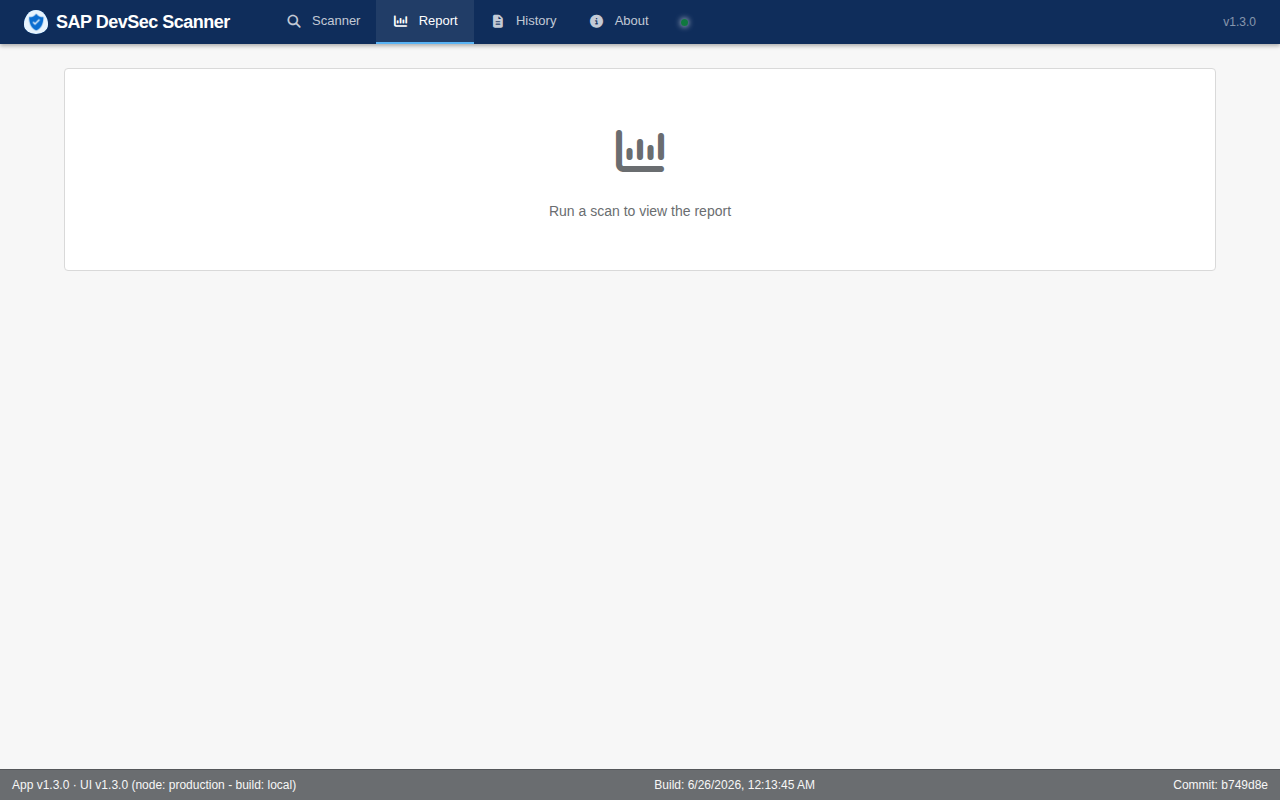
The report is organized into tabs per scanner. Each tab shows:
- The number of findings by severity
- Finding details: affected file, line number, description, recommendation
NPM version check
The NPM tab compares dependencies with the latest version published on npm. When a lock file is present, its resolved version takes precedence as the comparison baseline.
| Difference | Severity | Code |
|---|---|---|
Major (x → y) | 🔴 HIGH | NPM_OUTDATED |
Minor (x.y → x.z) | 🟡 MEDIUM | NPM_OUTDATED |
Patch (x.y.z → x.y.w) | 🔵 LOW | NPM_OUTDATED |
The update table shows the current version, latest available version, and the source used for the comparison.
Version ui5
Detailed view of the ui5 x.x.x version, with data from https://ui5.sap.com/ :
- Librairies,
- Composants,
- Themes.